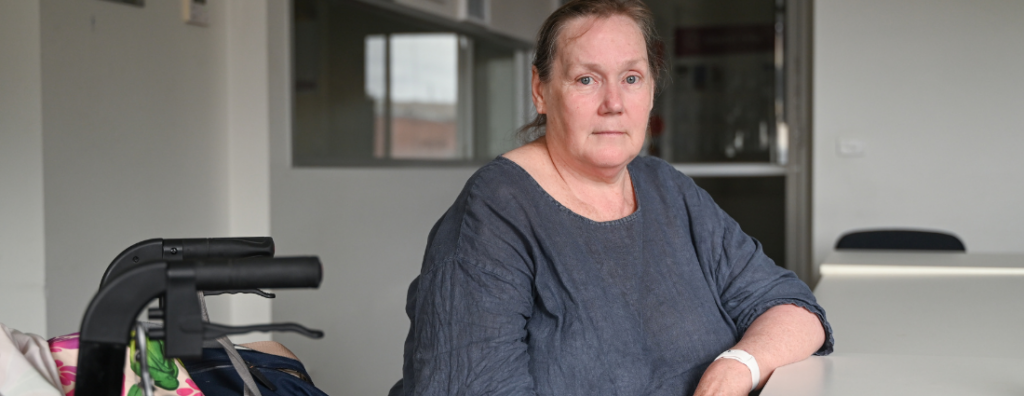
For many people, sitting around the table to enjoy a family meal is a daily routine. For Rudi and her daughter it was a rare luxury.
“Sitting down together around a table full of food felt like a special occasion, rather than an everyday part of life,” Rudi shares.
“Food was something that had to be carefully managed. Every shopping trip involved choices about what we could afford, what could be stretched, and what had to be left behind.”
At times, ensuring her daughter had enough to eat meant Rudi going without herself.
“When my daughter was young, there were times I told her I had already eaten, when in reality I was trying to make sure there was enough food for her.”
Having trained as a professional chef, before having to give up work due to illness, so much of Rudi’s earlier life centred around food.
“Perhaps the greatest irony is that I earned my living cooking for other people,” she says.
“I spent years preparing meals, feeding strangers, families and thus caring for others through food, yet there were times when I felt unable to give my own daughter the food experiences and traditions that had shaped my childhood.”
One of these experiences was allowing her daughter to play with ingredients, through cooking or baking.
“My daughter expressed frustration and resentment that I never let her cook and experiment in the kitchen the way her friends did,” shares Rudi.
“What she didn’t understand at the time was that I couldn’t afford to waste ingredients. If something went wrong, there might not be money to replace what had been used. Every ingredient mattered and every meal had to count.”
Rudi explains that the impact of food insecurity extends far beyond just empty cupboards.
“Food insecurity is about far more than hunger,” she says.
“It affects health, relationships, confidence and family memories.
“It creates stress, shame and exhaustion. It changes how people shop, cook, eat and think. It is the constant worry of whether what you have will last until the next payment. The mental arithmetic that never stops, and the quiet decisions that nobody else sees.”
Having lost hope, Rudi was sceptical when her disability support worker suggested she visit Uniting in Prahran for support.
“Asking for help is hard,” she shares.
“[In the past] when I needed help it wasn’t there. I was treated as an inconvenience, a non-entity.”
Still, Rudi decided to give Uniting a chance.
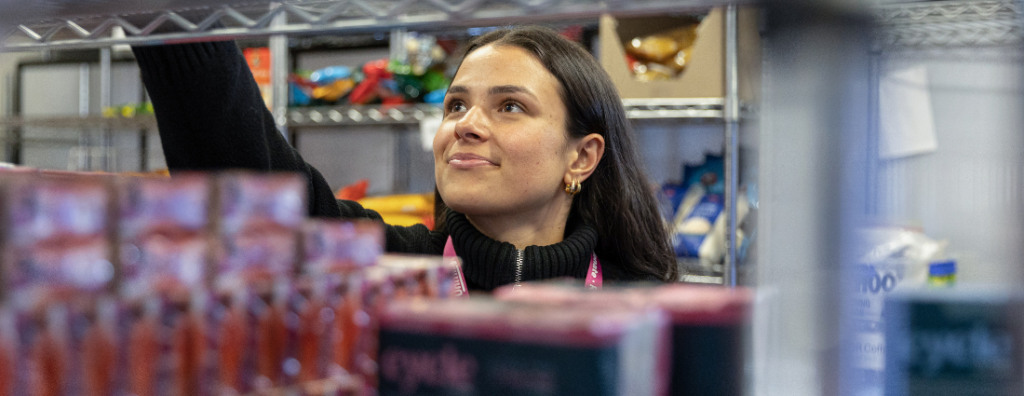
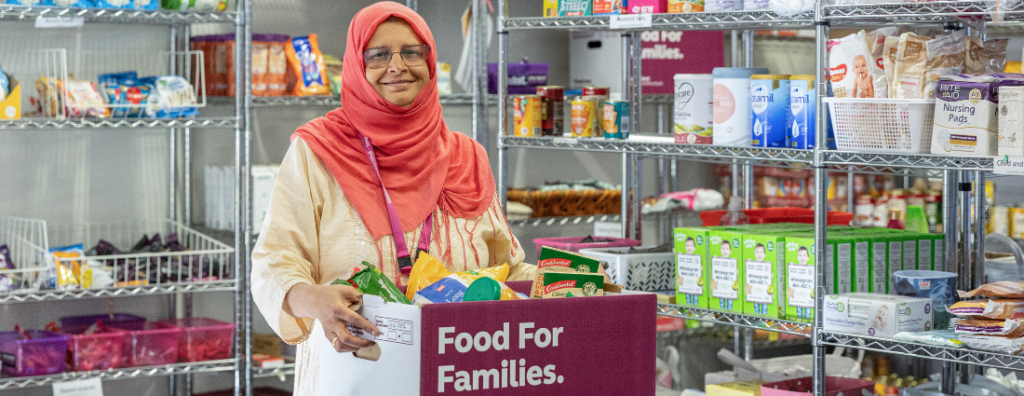
“I had an interview, and they took me through the food pantry, and it was a totally different experience,” she says.
A year on, Uniting has supported Rudi with food relief, community meals and financial advice, support that has made a meaningful difference in her life.
“Since coming to Uniting, I have never felt judged, not once,” she says.
“That may sound like a small thing, but when you have struggled financially there can be a great deal of embarrassment attached to asking for help.
“Rather than making me feel like a recipient of charity, Uniting has helped me feel part of a community. They have provided not only food, but also connection, respect, and a sense that I matter.
“That has made a difference far beyond the value of the meal or the groceries themselves.”
Rudi is not alone. 1 in 5 Australian households, like hers, have had to skip meals – or entire days of eating – just to get by.
By registering for Food For Families today you can help people like Rudi, and ensure no one has to face hunger and hardship alone.